|
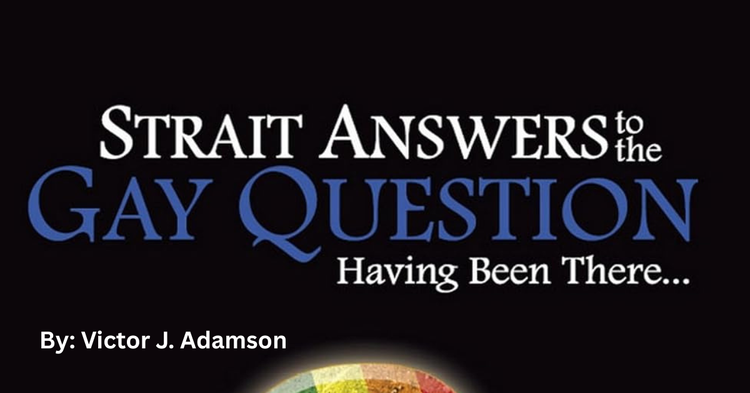
I don’t hear a lot of people discussing how Christians can best answer the homosexual question. What is the homosexual question? I’ll clarify: How do God-fearing Christians respond to homosexuality? How do we uphold our biblical beliefs and still demonstrate Christian love? What counsel can we give those who struggle with such issues? Okay, that’s three questions. Perhaps this lack of discussion is because Christians don’t do a lot of thinking about homosexuality until they are confronted with it. For me, one such confrontation came when a friend, who seemed quite conservative (by long-skirted, homemade rice-milk-making standards), started posting endlessly online about her newfound allyship, how Christianity has interpreted the bible wrongly, or how God doesn’t care about whom we love, only that we love. She can often be found railing on “toxic theology,” the sentiments of claiming to “love but disagree”, or other such offenses. But it was one of her recent posts that really caught my attention: “Hot take: If someone’s existence offends you… that says more about you than them.” It’s not that I found the post surprising; I’ve seen variations of this aphorism bandied about on socials for the past decade. I suppose it caught my attention because I felt it had confusing implications: Are we, as Christians, offended at the existence of homosexuals? And if we are, what exactly does it say about us? This question confuses because it’s designed to. The post isn’t seeking clarity — it’s subverting it. Certainly, there are taboos and societal norms. And people tend to react to breaches of said standards: a burly, bearded man wearing feminine clothing, for instance. Such ostentation may strike the average person as odd, or even as an offensive act. Men who are attracted to women may find such displays distasteful or a poor imitation of femininity. But are people offended that a homosexual or trans person exists? Are Christians offended? No. This is a personal attack dressed as discourse; such phrases are engineered to vilify the belief-holder rather than to rebut the belief, an ad hominem fallacy. For instance, if a person says “I disagree that homosexual marriage is equal to heterosexual marriage on biblical grounds,” they might receive a response of “You’re homophobic!” Or “You’re a bigot!” I would argue that in such exchanges, debate has been deliberately stymied with a clever turn of phrase. Calling someone homophobic implies that they are afraid of homosexuals. Calling someone a bigot implies that they are obstinately or unreasonably attached to their beliefs or that their beliefs are more prejudicial than genuine. Both words, homophobe and bigot, claim to know the heart and motive of the believer.
Nobody wants to appear afraid of homosexuals. And nobody wants to be obstinate or prejudiced. When faced with such accusations, many will back down or stay quiet. After all, we want to be kind and loving Christians. This brings me back to my friend’s post. Purporting that the problem lies in the homosexual’s existence is a similar ad hominem. It is to imply that that bible believing Christians wish death or non-existence on homosexuals. Do not be swayed by such flimsy rhetoric. The call for Christians is the same as it always was: to love and to keep loving even, and perhaps especially, when we disagree. And any Christian worth his salt knows that part of a Christians’ duty in expressing love is to also espouse truth. To stay silent about truth is simply a comfortable act and not a loving act at all. Of course, such a love will seem alien to those who have redefined love as “cozy affirmation.” Practitioners of genuine, biblical, truth-telling love will undoubtedly face contempt in our affirmation-above-all climate. But don’t be dismayed: “Blessed are you when people insult you, persecute you and falsely say all kinds of evil against you because of me.” Matthew 5:11 Perhaps the real reason Christians don’t discuss the homosexual question more readily is that they don’t want to appear bigoted. But there is another sticking point in this conversation. Perhaps we don’t discuss it because it is a difficult issue to tackle with no 12-step programs to handily solve the issue. I won’t attempt to lay out a full course of action here, but I will say this: It’s not up to you to “solve” a struggling Christian’s homosexuality, or any other issue for that matter. Your job is to bring them to the foot of the cross, share the gospel, share truth, and love them. And if the world accuses you of practicing phobias or denying existences, go on loving and speaking truth as boldly as you can and bring people to Jesus. Homosexuality almost always has roots in pain and feelings of “otherness.” And when we are bold enough to trace the problem to the root, we can help bring about healing. I’m not saying we will definitely unravel their homosexuality, but might we bring healing by addressing the issue of brokenness? By calling them from “otherness” into “oneness”? Invite men and women to the cross and show them Jesus’ love while doing your best to model brotherly love. Speak the truth, but love. Love your brothers and sisters into the fold of Christ. When Jesus’ love is modeled through human love, great and life-transforming things can happen. Bear one another’s burdens and so fulfill the law of Christ. Amen.
|